
Oregon researchers create photocatalyst to produce hydrogen from water — ScienceDaily
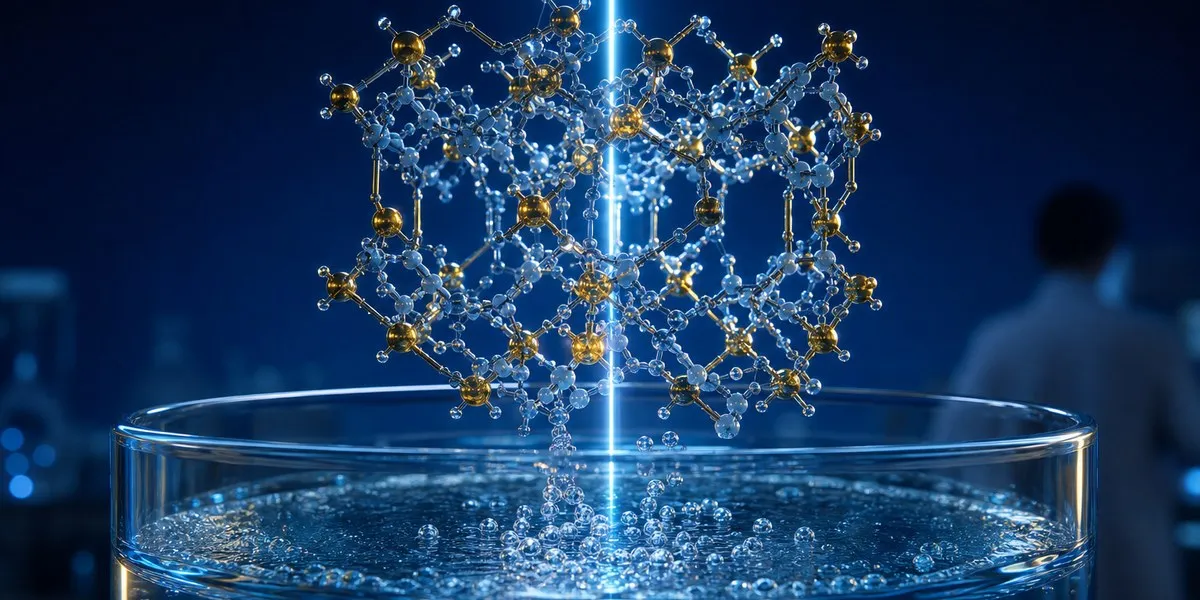
Researchers at Oregon State University in the United States have created a light-sensitive material capable of producing hydrogen from water without using an additional expensive metal catalyst. The material is the BVR-19 photocatalyst — a metal-organic framework activated by light that can accelerate the hydrogen-generation reaction, ScienceDaily reports.
The role of sulfur compounds
The work was led by Kyriakos Stylianou of Oregon State University’s College of Science. According to the researchers, BVR-19 contains an unusual bond between sulfide groups. Under the influence of light, this bond temporarily breaks, forming highly reactive sulfur compounds that take part in the electron transfer required for hydrogen production.
Unlike approaches in which metal atoms play the main role, in this material sulfur-containing organic components absorb light energy and direct electrons. This makes it possible to avoid using an additional expensive metal catalyst. Another property of BVR-19 is that it forms independently in aqueous solutions at room temperature, reducing the energy costs of its synthesis.
More current news is available on the UA.News Telegram channel Telegram.
An alternative to production from natural gas
Hydrogen is used in fuel cells for transport, as well as in ammonia production, metal refining, and plastic manufacturing. The most common industrial method of obtaining it — steam methane reforming from natural gas — is accompanied by carbon dioxide emissions.
Hydrogen production through water splitting could be a cleaner alternative, but existing electrocatalytic methods require electricity, and their environmental impact depends on the source of that energy. The article notes that hydrogen produced from natural gas costs about $1.50 per kilogram, while “green” hydrogen costs approximately $5 per kilogram.
The study’s results were published in the Journal of the American Chemical Society. The authors believe that comparing metal-organic framework variants with different metals enabled them to formulate principles for developing more efficient materials for solar fuel production.


