

The main goal of the Russian strikes on Kyiv’s largest bridges is to create a propaganda effect and intimidate the population. It is quite difficult to destroy these structures—their design strength was calculated for the “Cold War” era. Ukrainian experts were almost unanimous in this assessment following the first attacks on the capital’s bridges.
Indeed, the Russian strikes on the bridges across the Dnipro River in early October did not destroy them, but they plunged the capital into a temporary transportation crisis. It turned out that even partially damaged bridges and the constant threat of drones can paralyze logistics.
And this problem could worsen with the onset of freezing temperatures and snowfall. The business community was among the first to realistically assess this threat—large companies are already looking for ways to move personnel from one bank to the other.
Thus, the theoretical question of whether Kyiv’s bridges will withstand drone or missile strikes is evolving into the question: what should be done when they have to be closed for inspection and reconstruction? UA.News reports on practical steps being taken by businesses and alternative solutions from the authorities aimed at ensuring safe transportation in the capital.
Attacks on bridges have already changed life in the capital
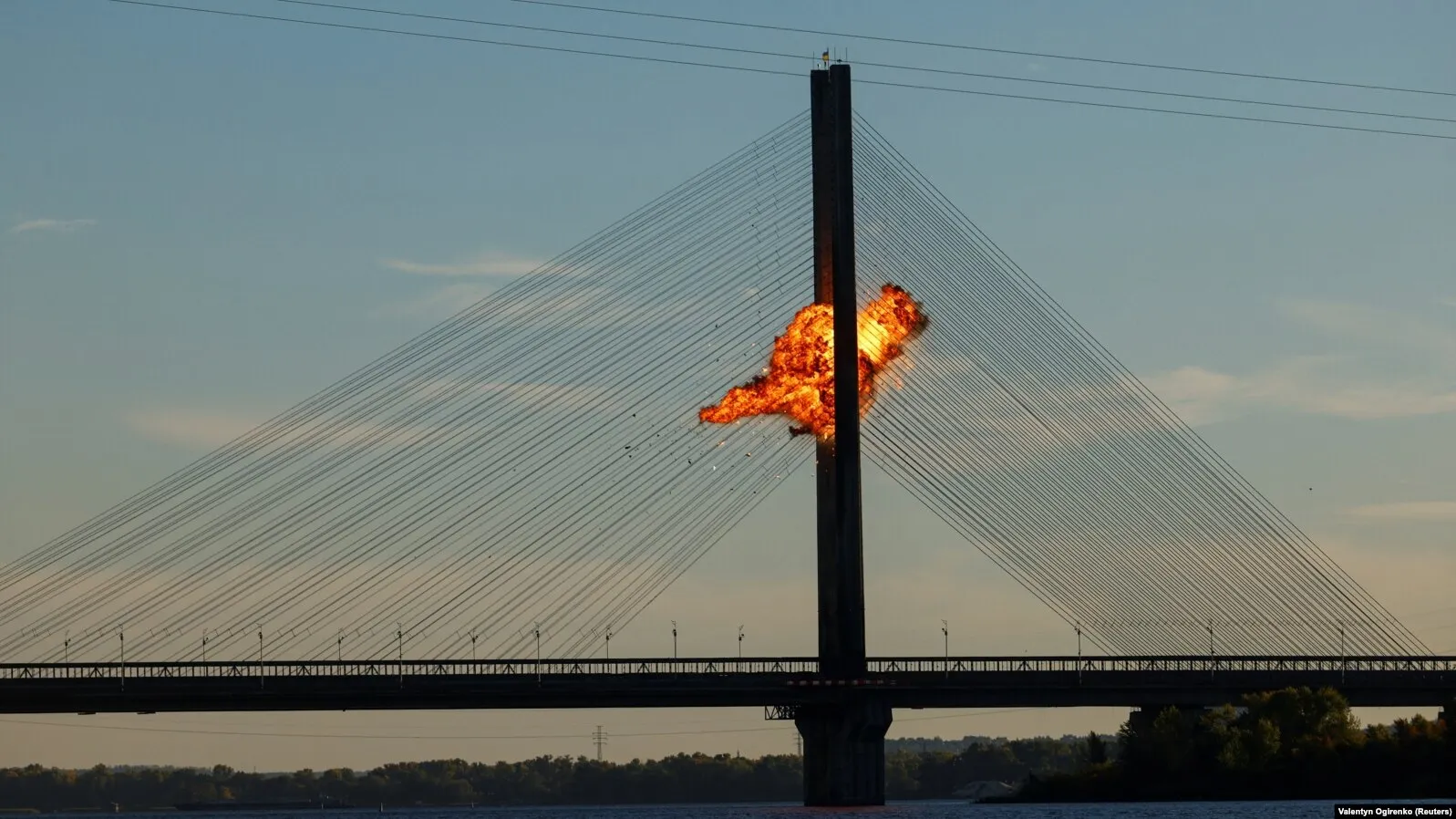
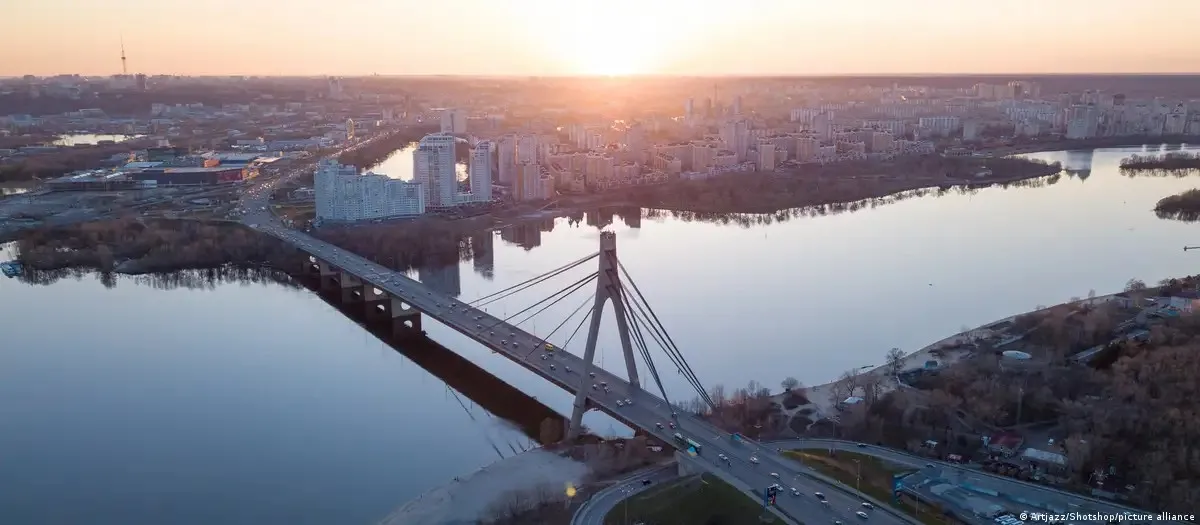
In early October, Russian drones attacked Kyiv’s largest bridges—the South and North Bridges—several times. Key transportation routes in the capital, including the metro and the railway, pass over these bridges.
On October 1–2, drones attacked the South Bridge several times. They damaged a bridge pier, a guardrail, the road surface, and the protective concrete covering of the metro. Following the attacks, car and metro traffic across the bridge had to be completely halted.
On October
3, Kyiv’s second bridge—the Northern Bridge—came under attack. The roadway and the trolleybus overhead lines were also damaged there, causing traffic from the left bank to the right bank to be temporarily blocked. The very next day, October 4, Russian drones attacked the Northern Bridge again while there was heavy traffic. Two people were injured.
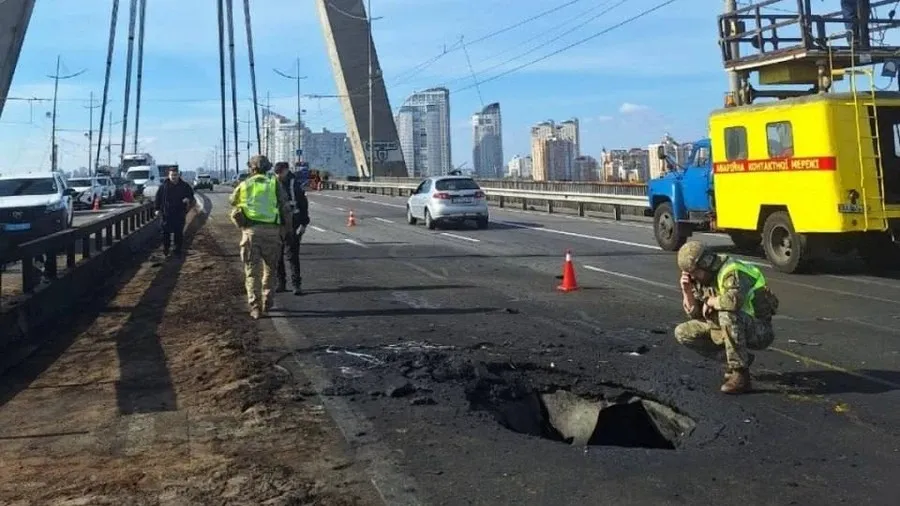
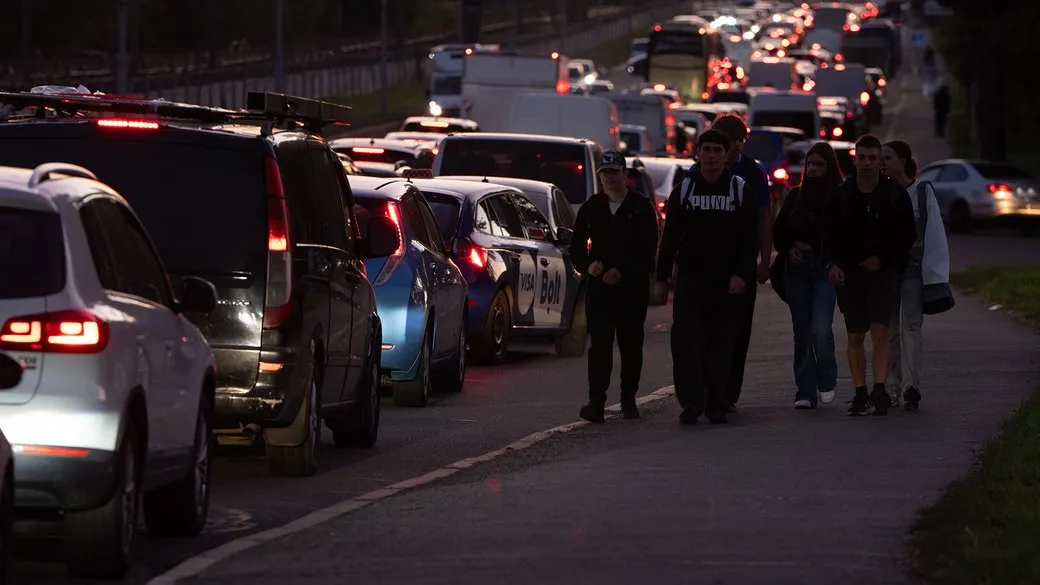
Although the damage was quickly repaired, the temporary closure of the crossings led to massive traffic jams that quickly spread to other routes and bridges. Lines formed at bus stops, buses and minibuses were overcrowded, and some people tried to cross the bridges on foot.
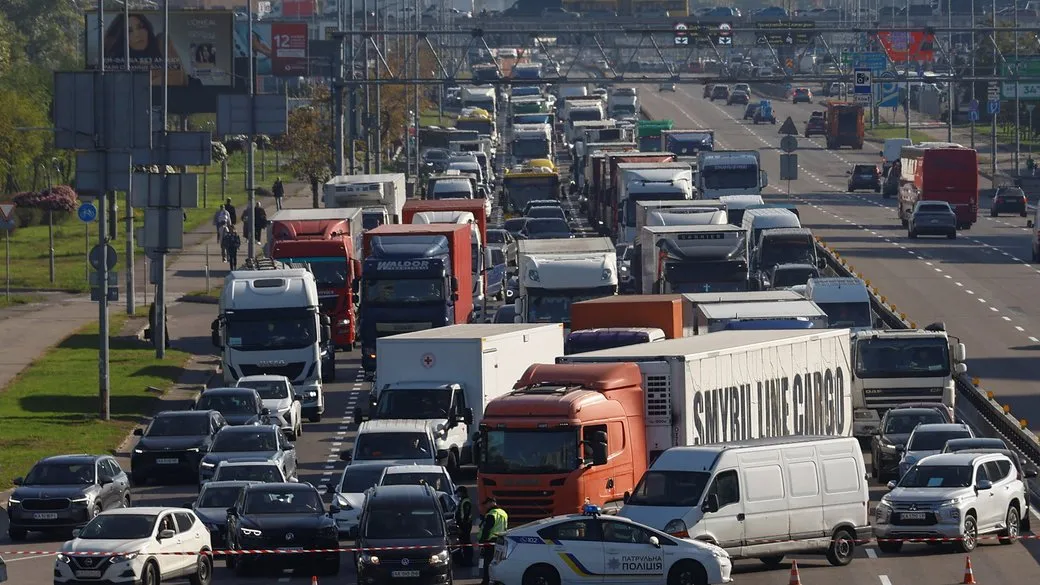
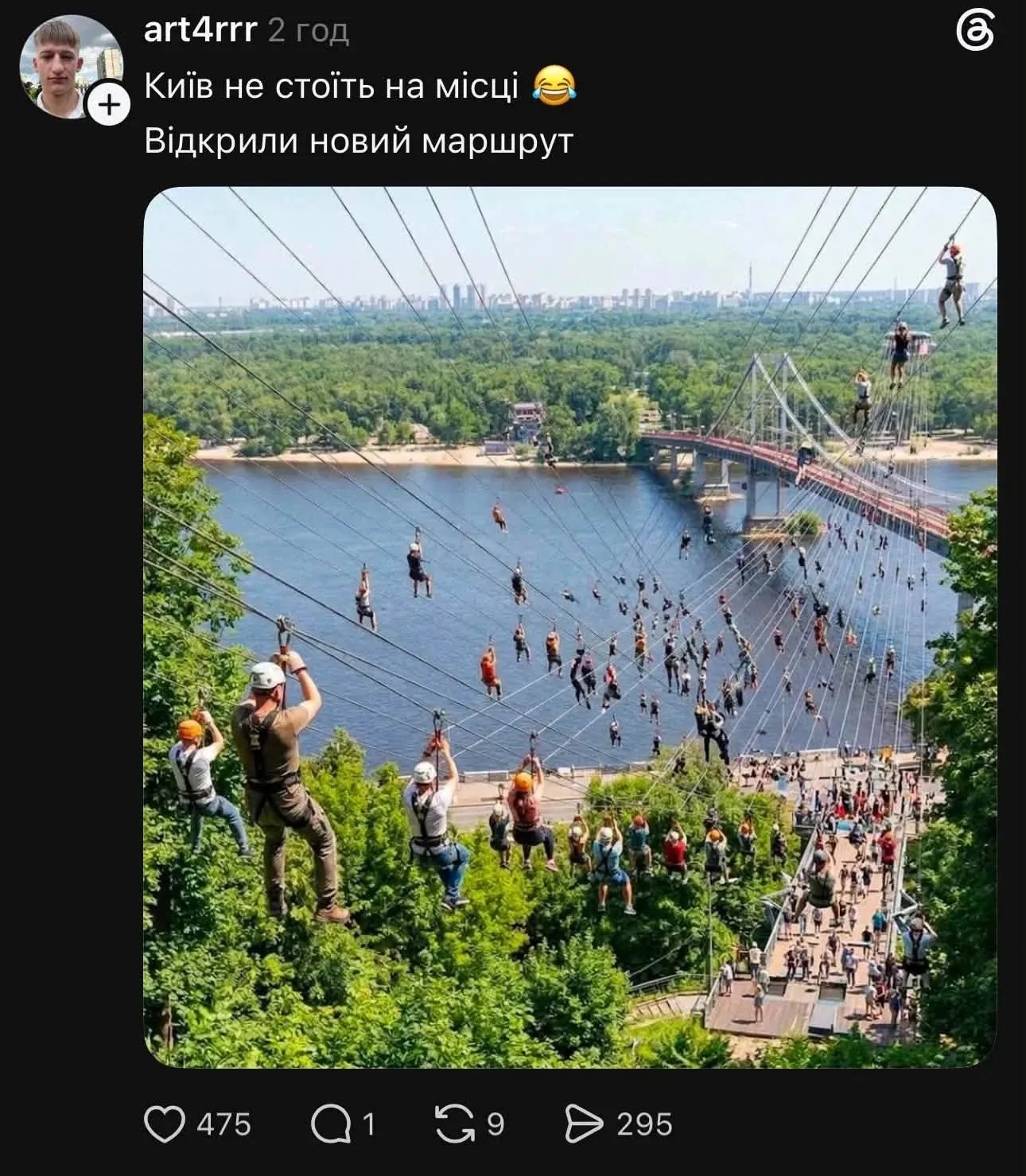
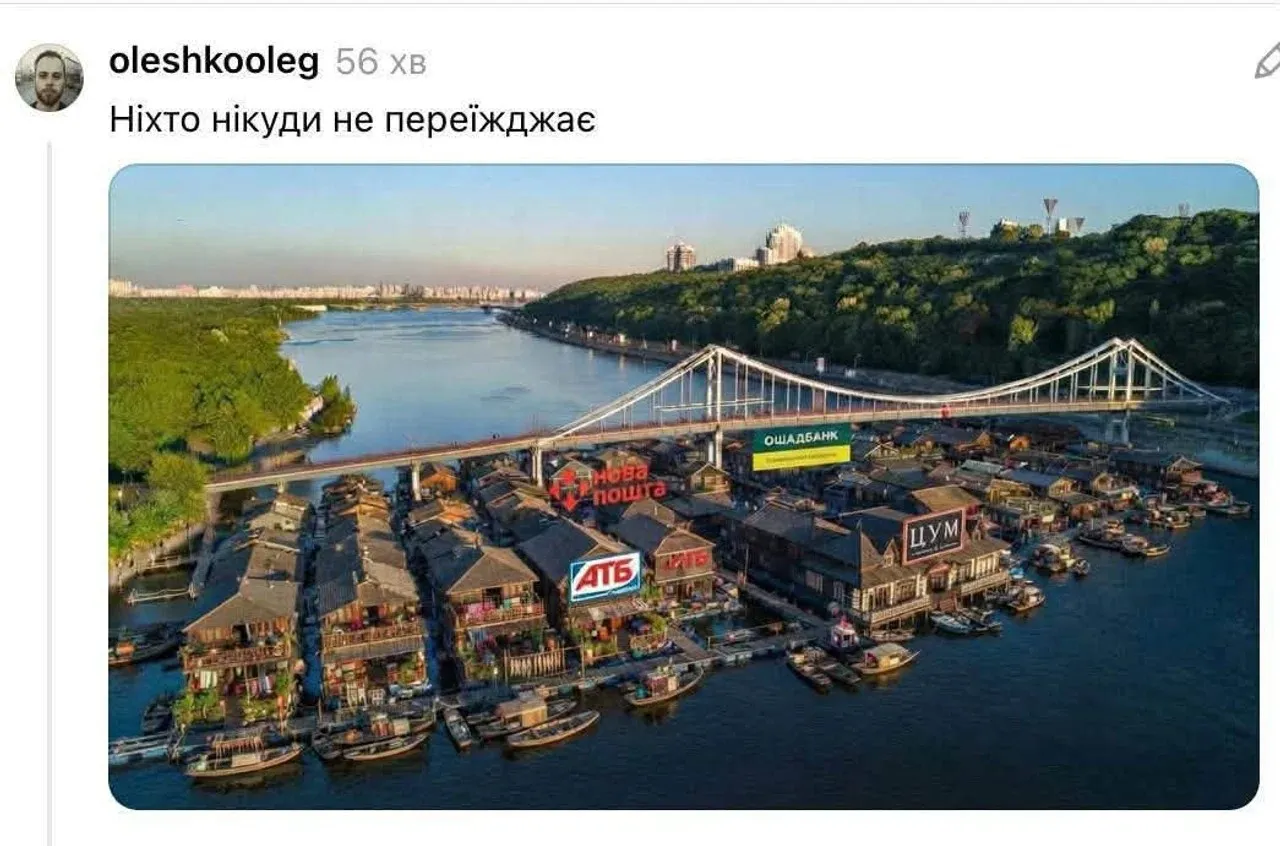
This had a particularly severe impact on residents of the Left Bank, where more than a third of Kyiv’s population lives. Many of them have to commute to work on the right bank every day. Kyiv residents vented their frustration over the transportation gridlock and the authorities’ inaction through numerous memes on social media.

Kyiv
residents are also certain that in winter, snow, icy roads, and accidents will compound the bridge problems. In the near future, all of this could result in daily traffic jams stretching for many kilometers during cold spells.

If the strikes continue into winter
Further targeted strikes on bridge structures could lead to risks associated with a cumulative effect. Kyiv may find itself in a situation where certain bridges will have to be taken out of service for an extended period or have their capacity significantly reduced.
Ukrainian retail chains operating in Kyiv have already begun preparing for a worst-case scenario and the possible closure of bridges. Companies are considering rotating employees between stores, having them work closer to home, implementing remote work, and organizing shared rides.
At Foxtrot and Auchan, employees who live on one side of the river but work on the other are being transferred to stores closer to their homes. For support teams, they are planning to implement remote work and are also developing an internal service to coordinate shared rides.
The Novus chain reported that its existing infrastructure allows it to maintain stable operational processes even if logistics between the banks of the Dnipro River become complicated. In particular, the company has several office locations on both the right and left banks of the capital. This allows employees to choose their workplace based on the current situation.
As a result, the company is shifting from reacting to individual traffic jams to planning operations under conditions of potentially unstable cross-river traffic. This goes beyond just the movement of personnel.
Food, fuel, medicine, construction materials, and other goods are also transported across the bridges. If some of the crossings have to be closed regularly, trucks are forced to take longer routes. This increases fuel costs, delivery times, and the number of vehicles required. As a result, these additional costs will be factored into the price for the end consumer.
Unimpeded movement of emergency services, medical personnel, utility workers, repair crews, and suppliers will also be critically important during the cold season. If bridge damage, power outages, and prolonged traffic jams occur simultaneously, this will slow down the response of these services. First and foremost, this applies to emergencies involving heating networks, power grids, or water supply systems.
Against the backdrop of intensifying attacks on energy infrastructure on the eve of winter, bridge damage could exacerbate the negative impact of Russian strikes on the energy sector. Kyiv residents will face difficulties not only with electricity and heating but also with their ability to physically move around the city.
In such a situation, a transportation collapse could disrupt the operations of hospitals, businesses, stores, schools, and public utilities. That is precisely why it is crucial for Kyiv to have not just one “Plan B,” but an entire system of alternative routes.
The authorities’ contingency plans: commuter trains, pontoon crossings, and a tunnel under the Dnipro River
Amid constant drone attacks in the capital, protocols for crossing bridges during air raid alerts have already been changed several times. Currently, on the South Bridge, the “green” metro line is once again transporting passengers between the banks during a yellow threat level. However, only one metro train is allowed on the bridge at a time. Service resumed after an inspection deemed the bridge safe following drone strikes.
On the Podil-Voskresensky Bridge, traffic will be halted in both directions for 15 minutes after an air raid alert is issued, and for the same duration after the all-clear is given. After that, traffic will resume fully. Traffic will not be restricted on the other bridges across the Dnipro River.
The capital is also increasing the number of ground transportation routes between the riverbanks: 21 routes connecting the left and right banks have been announced—15 bus routes and six trolleybus routes. Replacement buses for the metro have been launched from stations on the “red” line to the “green” line so that passengers can reach the other bank. In addition, 18 extra shuttle trains on the circular commuter rail line will run between the left and right banks of the Dnipro River until October 9.
A backup connection between the left and right banks of the Dnipro is another crisis-response solution being discussed by the authorities. Options include pontoon crossings, earthen dams, and, in the future, a tunnel under the Dnipro and other alternatives. For example, the Verkhovna Rada Committee on Transport and Infrastructure proposed a “Plan B” for Kyiv: launching ferry crossings for people and vehicles.
On October 3, Minister of Recovery, Infrastructure, and Transport Mykola Kalashnyk announced that construction of several pontoon crossings over the Dnipro River would begin in Kyiv in the coming days.
“The urgent solutions are a dam and a pontoon crossing, which can be built quickly… This work has already begun. A coordination meeting was held at the President’s office. We have received all the tasks, prioritized by urgency. The city had not been handling this on its own, so a decision has now been made to have the ministry, the Recovery Agency, the military, and the capital’s authorities take charge,” the minister reported.
The ministry is confident that such crossings can be built in three months, and the structures themselves will be able to provide at least half the traffic capacity of the capital’s bridges. “On average, about 600,000 vehicles cross the bridges between the left and right banks every 24 hours. And the goal is to maintain this traffic capacity,” Kalashnik stated.
At the same time, engineers in the field consider such crisis-response ideas to be inappropriate when it comes to an alternative to a large bridge.
“Is this a full-fledged replacement for a bridge? Of course not. We cannot compare a temporary solution—which is mostly used by the military or, perhaps, the State Emergency Service, which has a certain fleet of such pontoon crossings at its disposal—with a permanent bridge. It is highly inaccurate to suggest that permanent traffic will flow across a pontoon crossing in the same way as it does across a bridge. “The only alternative to a bridge is another bridge as a permanent structure,” commented Andriy Koretskyi, associate professor in the Department of Bridges, Tunnels, and Hydraulic Structures at the National Transport University.
Bridge-building experts consider strengthening the protection of existing bridges to be the most realistic solution, rather than building dams or pontoons. And certainly not underwater tunnels, the design and construction of which cannot be a quick solution.
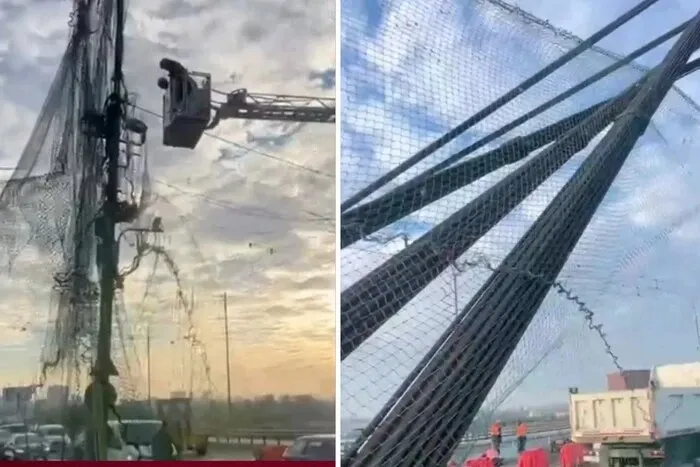
There has, however, been some progress on the issue of bridge protection. Recently, residents of the capital noticed that the Northern Bridge in Kyiv had begun to be covered with anti-drone protective nets. It is believed that such protective structures will soon appear on other bridges.
In addition, more than 12 automated turrets have been installed in Kyiv to counter jet-powered drones. It is expected that these automated combat modules, designed for 50-caliber machine guns, will, in particular, protect key crossings over the Dnipro River.
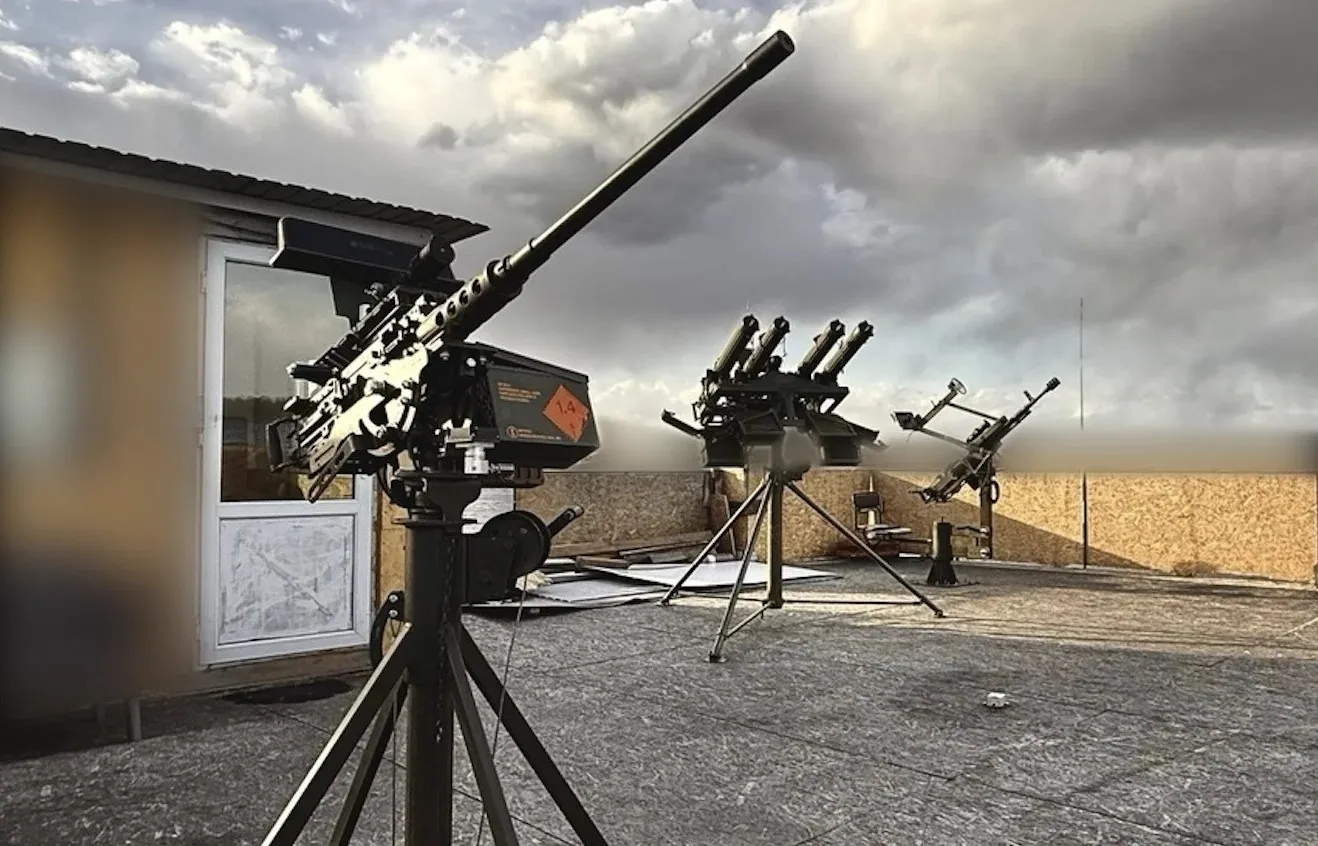
Military personnel have been actively commenting on the
attempt to organize air defense for the main bridges only in the fifth year of full-scale war.
“As for the AI-powered turrets, I’ll throw in a bit of a spoiler: what was installed in Kyiv to repel attacks on the bridges isn’t anything conceptually new or unknown…Similar systems have been installed at the National Security and Defense Council for a year now and are being supplied to the Joint Forces Operation (I wouldn’t say it’s ideal, but that’s the reality), yet they weren’t used quite properly due to limited capabilities and a lack of willingness on the part of many officials… I hope this precedent will serve as an impetus to improve the protection of other critical infrastructure and, in general, to develop and scale up the AI-based air defense system,” commented Senior Lieutenant of the Armed Forces of Ukraine, call sign “Alex,” on the strengthened protection of the crossings.
Military personnel note that it has long been necessary to install protective frameworks on bridges in the capital, develop small-scale air defense systems, and involve the police and municipal security forces in piloting anti-drone drones.


