
India experienced its driest monsoon in 11 years — Deutsche Welle
India experienced its driest monsoon in 11 years: from June to September, the country received 759.4 mm of rainfall, compared with a long-term average of 868.6 mm. The 12.6% rainfall deficit affected harvests, water reserves in reservoirs and electricity generation, Deutsche Welle reports.
The monsoon was the fourth driest in India in the 21st century. Climatologist and former secretary of the Ministry of Earth Sciences Madhavan Nair Rajeevan called the strong El Niño phenomenon the main factor behind the weak rainfall. According to him, a warming climate may bring longer dry periods and greater rainfall variability.
Less water and electricity
The total volume of water in 178 reservoirs monitored by India's Central Water Commission stood at 132.7 billion cubic meters. This is below the average for the past 10 years of 151.1 billion cubic meters.
According to Grid India, hydropower generation in September fell by nearly 16% compared with the same month a year earlier. The electricity shortfall reached 560 million kilowatt-hours, the highest monthly figure in more than three years. After sunset, when solar power generation declines, the grid has fewer options to make up for the shortfall.
More current news is available on the UA.News Telegram channel Telegram.
Coal-fired power plants took on the additional load, but around 40% of such plants had critically low fuel stocks — less than a quarter of the required volume, according to data from the Central Electricity Authority. The government instructed some private industrial power plants to operate at full capacity and supply surplus electricity to the grid.
Farmers' losses and rising prices
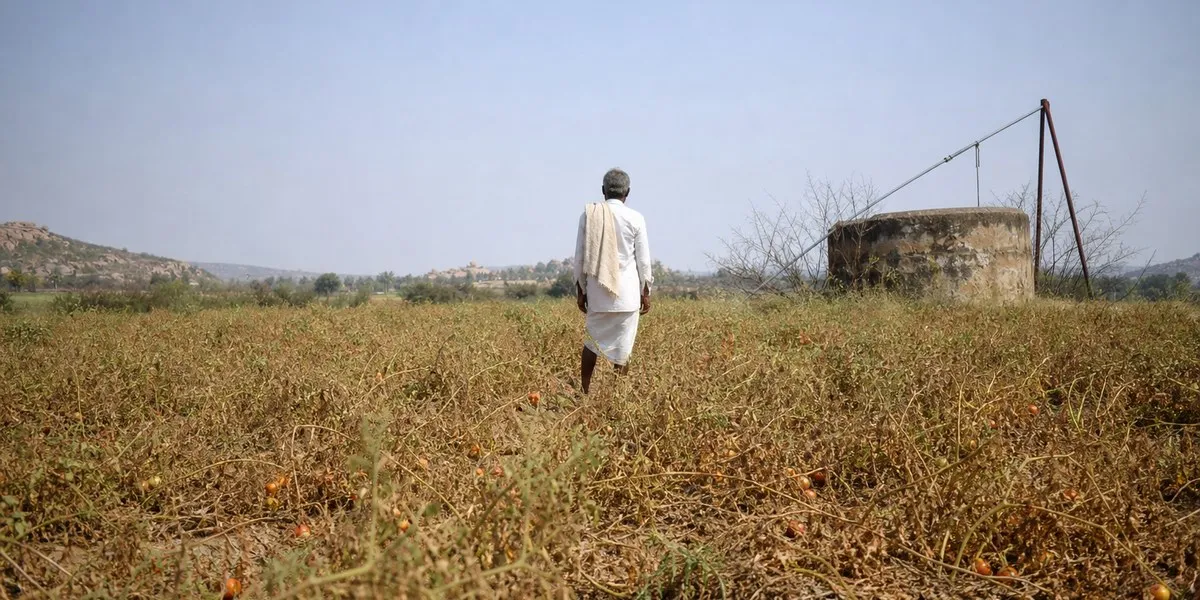
The weak monsoon has already hit agricultural producers. Farmer Ramesh Reddy from Kolar district in Karnataka invested 320,000 rupees in growing tomatoes on 3.5 acres, borrowing 250,000 rupees at 24% annual interest after pledging his wife's wedding jewelry. After his irrigation well dried up, his plants withered within three weeks, and he was unable to harvest a crop.
Economist Himanshu of Jawaharlal Nehru University described the situation as a double blow for rural households: falling agricultural incomes are occurring simultaneously with rising food prices. According to an ISignal analysis based on statistics from the Ministry of Consumer Affairs, onions cost 93% more in September than a year earlier, sugar was 28% more expensive, and rice was about 8% more expensive.
The next challenge will be the winter planting season: farmers are preparing to sow wheat, mustard and chickpeas, while the outcome will depend on soil moisture reserves after the weak monsoon.


