
China’s clock is six times more stable than Vienna’s — South China Morning Post
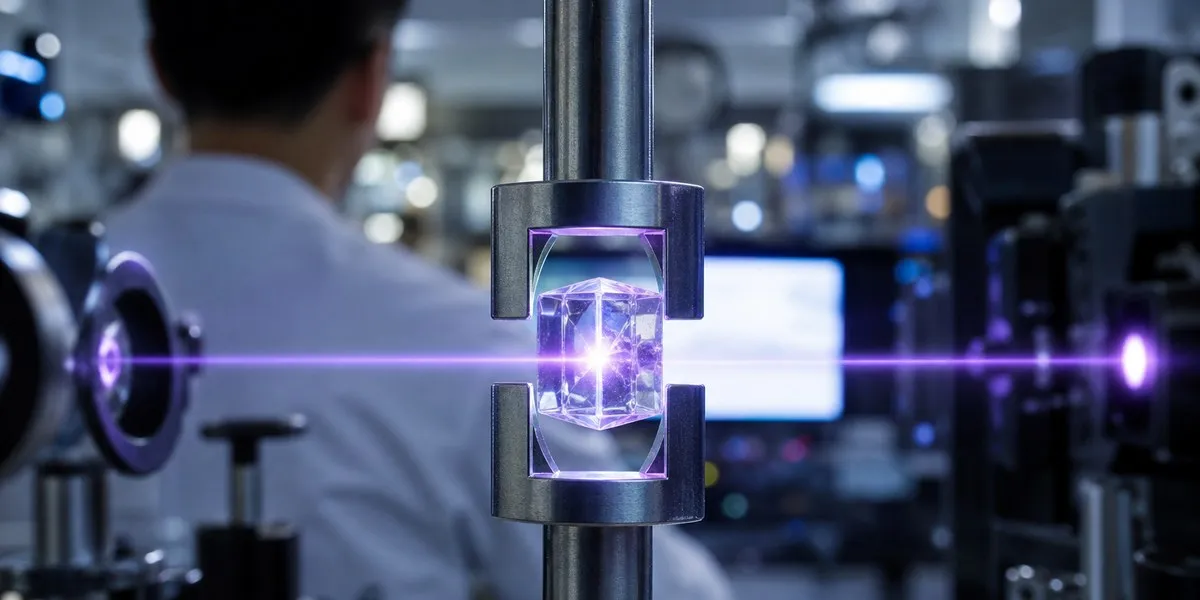
A Chinese nuclear clock developed by a team at Tsinghua University in Beijing proved to be about six times more stable than a device made by researchers at the Vienna University of Technology. These are the first results from the world’s first two working nuclear clocks, published in new Nature papers, South China Morning Post reports.
Keeping time with an atomic nucleus
Both teams independently used thorium-229 nuclei embedded in crystals. Unlike conventional atomic clocks, which track electron transitions between energy levels, the new devices rely on the rhythm of an atomic nucleus.
Ding Shiqiang, head of the Chinese group, explained that the nucleus is much smaller than an atom and is less affected by external electric and magnetic fields. According to him, this could eventually enable nuclear clocks to achieve extremely high precision.
Chinese scientists also tested two crystals grown separately. Their readings matched to within about three parts in 10 trillion. The measured signal also agreed with earlier data from the group of physicist Jun Ye at the JILA research institute in the United States, which used different crystals and equipment.
More current news is available on the UA.News Telegram channel Telegram.
Dark matter search and technological limitations
The Vienna team used its clock to search for dark matter but obtained no result. At the same time, researchers found that the signal frequency changed slightly depending on the area of the crystal through which the laser passed. As a result, the device kept slightly different time each time it was switched on.
For both clocks to work, ultraviolet laser light was passed through a thorium-229 crystal and tuned for maximum absorption by the nuclei. The Chinese group produced this radiation by passing laser beams through cadmium vapor heated to 600°C.
For now, both nuclear clocks are less stable than the best atomic clocks. Scientists note that further development requires more advanced crystals with a more uniform thorium distribution and more powerful lasers. Thorium-229 is a rare radioactive isotope, which limits the possibilities for experiments involving crystal production.


