
75% of Ukrainians are open to negotiations with Russia to end the war

The overwhelming majority of Ukrainians—75%—are open to holding negotiations with Russia right now to end the war. At the same time, 62% of those surveyed said they are prepared to endure the war for as long as necessary.
“The overwhelming majority of Ukrainians (75%) are open to holding negotiations with Russia right now to end the war. Those who are not open to this account for 21%. The remaining 4% are undecided. We observed virtually identical results in February 2025,” according to a press release from KMIS.
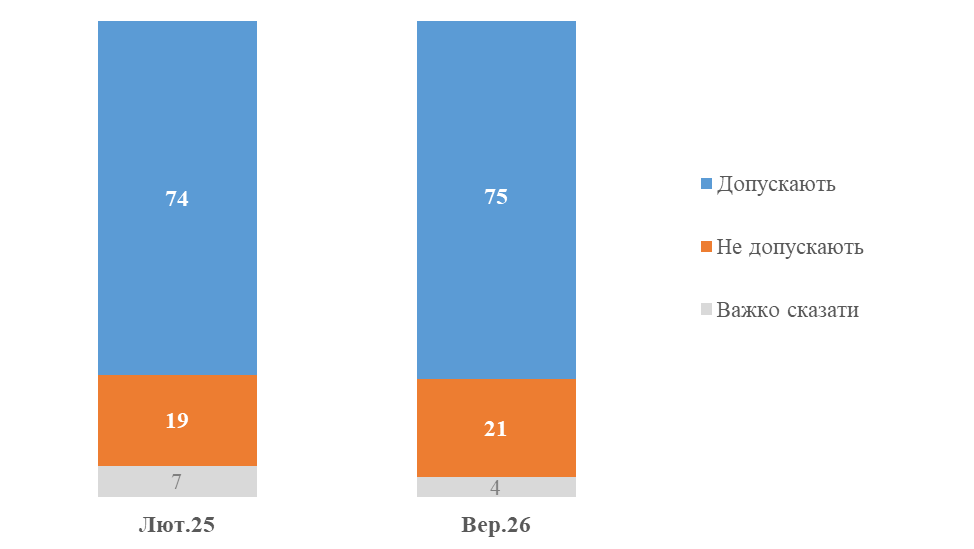
At the same time, sociologists emphasize that the wording of the question referred only to the fact of negotiations taking place, not to concessions by Russia. “It is incorrect to interpret this question as a measure of support for concessions in favor of Russia,” KMIS noted.
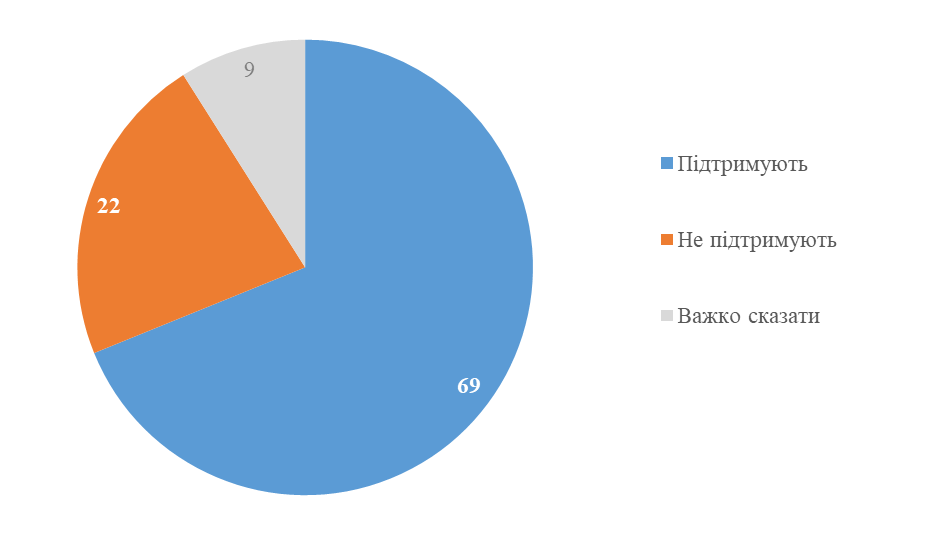
The pollsters also asked respondents whether they would support an immediate ceasefire, but on the condition that the occupied territories would not be legally recognized as part of Russia, the strengthening of the army would continue (i.e., there would be no “demilitarization” or other restrictions at Russia’s demand), and the movement toward the EU and NATO would continue.
“The overwhelming majority of Ukrainians—69%—are ready to support this option for ending hostilities. Twenty-two percent do not support it. The remaining 9% are undecided,” according to data from KMIS.
The pollsters also recalled the results of a survey conducted in late July–early August 2026. At that time, under a scenario involving “the withdrawal of Ukrainian troops from Donbas in exchange for abstract security guarantees from the U.S. and Europe,” 32% were willing to approve it, while 60% rejected it. However, if the scenario involved a “freeze” along the current front line and security guarantees in the specific form of increased arms supplies and financial support, then 59% were ready to approve it, while 31% categorically rejected it. At the same time, in May 2026, 61% rejected the scenario of a ceasefire along the current front line if there were no security guarantees and no increased arms supplies and financial support, as noted by KMIS.
“Thus, the fact that 69% of respondents in this survey support a cessation of hostilities along the current front line is largely driven by expectations of real security guarantees (since we were talking about ‘strengthening the army’ and ‘moving toward the EU and NATO’),” the press release states.
In addition, according to KIIS, the majority of Ukrainians—62%—say they are prepared to endure the war for as long as necessary. Another 4% mention a relatively long period—one year. Twenty-three percent are willing to endure a shorter period—a few months or half a year. The remaining 11% were undecided.
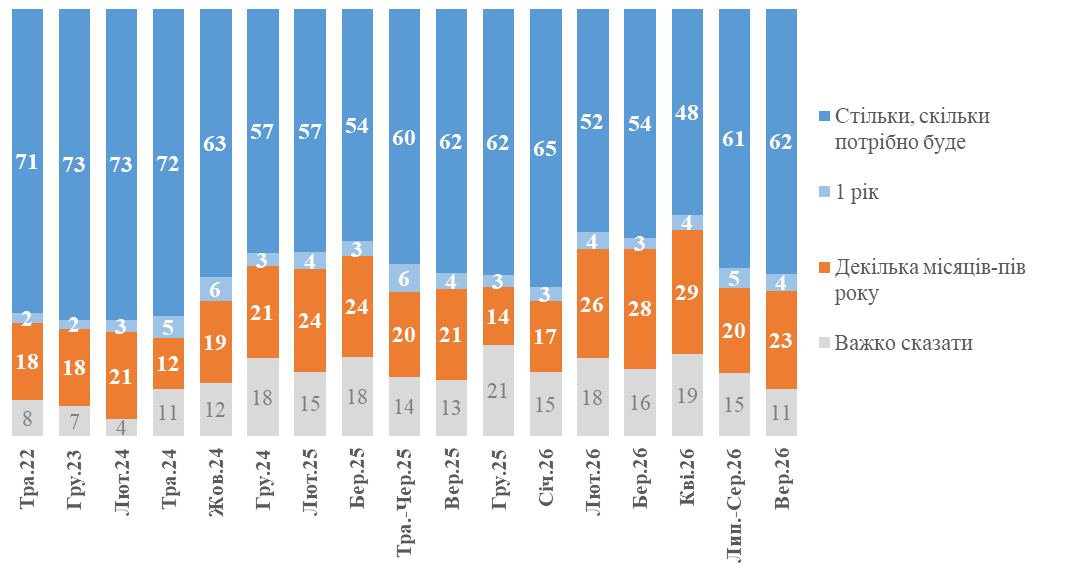
“Compared to the previous survey conducted in late July–early August, the figures have remained virtually unchanged. It should be noted that this survey was conducted as active terror campaigns involving rocket-powered drones began, with new strikes targeting purely civilian infrastructure. In other words, at least as of September 12–21, these events did not lead to a decline in public morale. At the same time, the survey was completed before the attacks on the bridges across the Dnipro River began,” the sociologists report.
They also note separately that in Kyiv, despite the start of the terror campaign involving jet drones, the figure did not decline: According to the survey, 72% of Kyiv residents are prepared to endure the war for as long as necessary (in late July–early August, the figure was 69%; the difference falls within the margin of error, KMIS clarified).
KMIS conducted its own nationwide public opinion poll, “Omnibus,” to which questions about war and peace were added at the request of the NGO “Forum.” A total of 1,002 respondents were surveyed via telephone interviews based on a random sample of mobile phone numbers across all regions of Ukraine (territory controlled by the Ukrainian government). The survey was conducted among adult (18 years and older) citizens of Ukraine who, at the time of the survey, were residing in territory of Ukraine controlled by the Ukrainian government. The sample did not include residents of territories temporarily not controlled by the Ukrainian government (although some respondents were internally displaced persons who had moved from the occupied territories), nor were citizens who had left the country after February 24, 2022, surveyed.
Under normal circumstances, the formal statistical margin of error for such a sample (with a confidence level of 0.95 and accounting for a design effect of 1.3) did not exceed 4.1% for indicators close to 50%; 3.5% for indicators close to 25%; 2.5% for indicators close to 10%; and 1.8% for indicators close to 5%.
Under wartime conditions, in addition to the aforementioned formal margin of error, a certain systematic deviation is introduced. Overall, the Kyiv International Institute of Sociology (KIIS) believes that the results obtained still retain a high degree of representativeness and allow for a fairly reliable analysis of public sentiment.
This is evidenced by the results of a survey conducted by the Kyiv International Institute of Sociology (KIIS) on September 12–21, 2026.


