
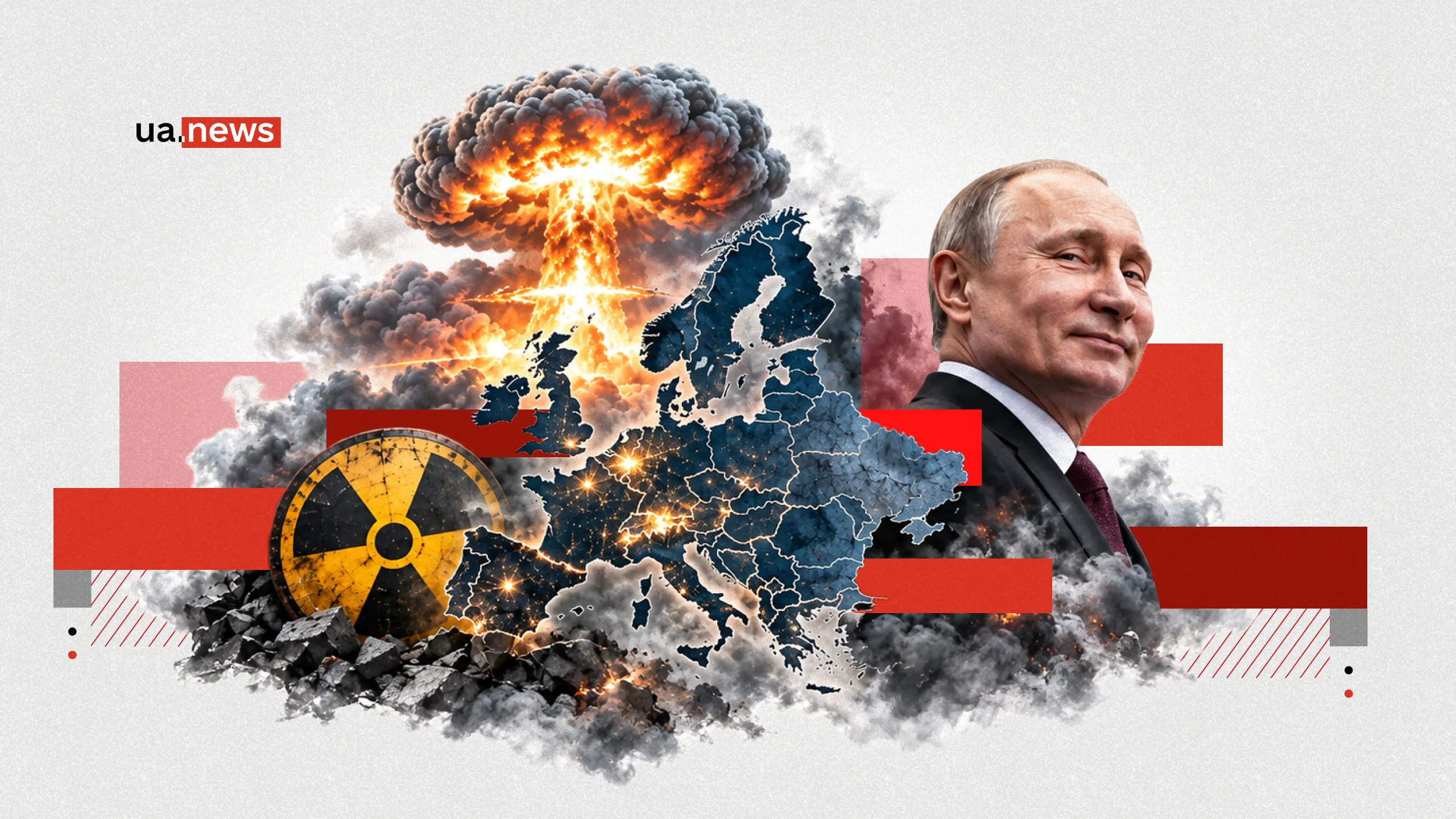
In Russia, there is once again talk of using nuclear weapons—and once again over an issue that does not actually exist in reality. On September 30, the Russian Embassy in Ireland suddenly reported “available information” regarding NATO’s alleged preparations for an air and naval blockade of Kaliningrad. It was immediately stated in no uncertain terms that, in such a case, nuclear strikes on Europe should be expected. Events then unfolded according to a familiar script: an official diplomatic note from NATO, a media frenzy, Lavrov’s statements about a “very short” war with Europe — and, finally, Putin’s speech at the “Valdai” Forum, where the Kremlin dictator once again brandished the nuclear “big stick.”
The pretext, as usual, is completely fabricated: NATO was clearly not preparing any blockade and would hardly ever have dared to take such a step, given the Alliance’s complete amorphousness, weakness, and political ineptitude. But the issue isn’t even the pretext, whether real or formal. The point is that the Kremlin has once again played the nuclear card and once again forced the world to talk about escalation and the danger of direct conflict.
Why is Russia doing all this, and is it really ready to press the “big red button”? UA.News political analyst Mykyta Trachuk, together with experts, examined the issue.
What Happened: A Chronicle of Several “Nuclear” Days
It all began with a post by the Russian Embassy in Ireland—an institution that, to put it mildly, certainly does not make decisions regarding Russian foreign policy. The diplomats suddenly began talking about “information” they allegedly possessed regarding a potential NATO blockade of Kaliningrad—and threatened to use “their entire arsenal, including nuclear weapons,” if anyone attempts to isolate the enclave.
No one explained where this “information” came from or how reliable it is. Not a single Alliance country has made any statements indicating preparations for a blockade. In fact, throughout the years of full-scale war in Ukraine, NATO has never once dared to take a step that could even remotely be interpreted as a direct threat to Russia. The Alliance is terrified of provoking the Kremlin and has still not provided Ukraine with the amount of weapons it actually needs. The idea of a naval or air blockade of the Russian exclave seems downright fantastical.
There’s more. Moscow sent NATO a diplomatic note accusing the Alliance of pursuing a “dangerous course” that carries a “high risk of triggering a direct armed conflict,” and warned of the possibility of “Russian strikes on decision-making centers in NATO member states.” At the same time, Russian state media launched a wave of reports about “red lines,” “Moscow’s patience,” and an “inevitable response.”
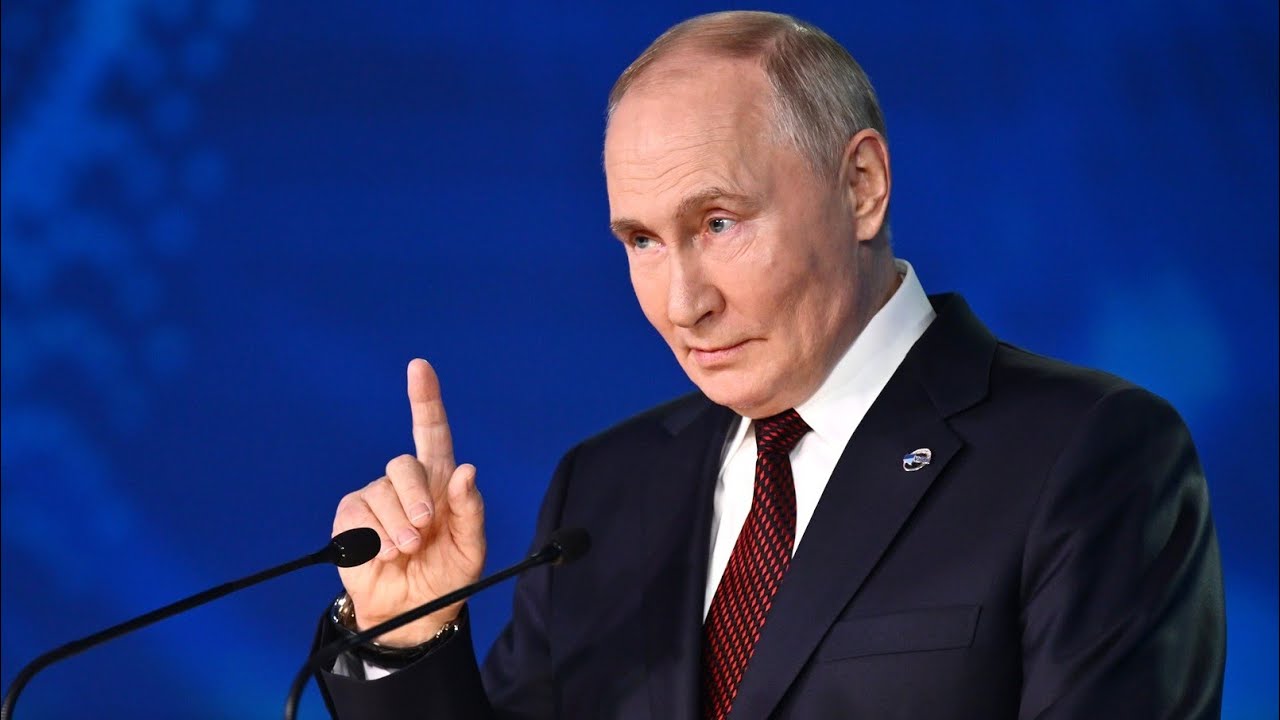
The climax came with Putin’s speech at the Valdai Forum on October 1. Formally, he stated that Russia has no plans to attack Europe and advocates for peaceful coexistence. But he immediately made a separate mention of Kaliningrad: if, he said, there were to be an attack on Russia (on Kaliningrad or any other territories), then the question of using all available weapons would be “inevitable” and would immediately be on the agenda. Putin also emphasized that in the event of a large-scale conflict, Russia would have to deal with NATO, which he called an adversary “twice our size,” and that in this struggle, Moscow would use its “competitive advantages”—alluding, of course, specifically to its nuclear arsenal. Separately, the Kremlin leader spoke of a “fatal point of no return” and stated that “one cannot assume that nuclear weapons will never be used.”
In other words, in just a few days, Russia has carried out a full cycle of blackmail involving weapons of mass destruction: a formal pretext—a diplomatic note—a media frenzy—and personal statements by Putin. And all of this revolved around the “blockade of Kaliningrad,” which simply does not exist.
Why does Russia resort to nuclear rhetoric: a ritual repeated regularly
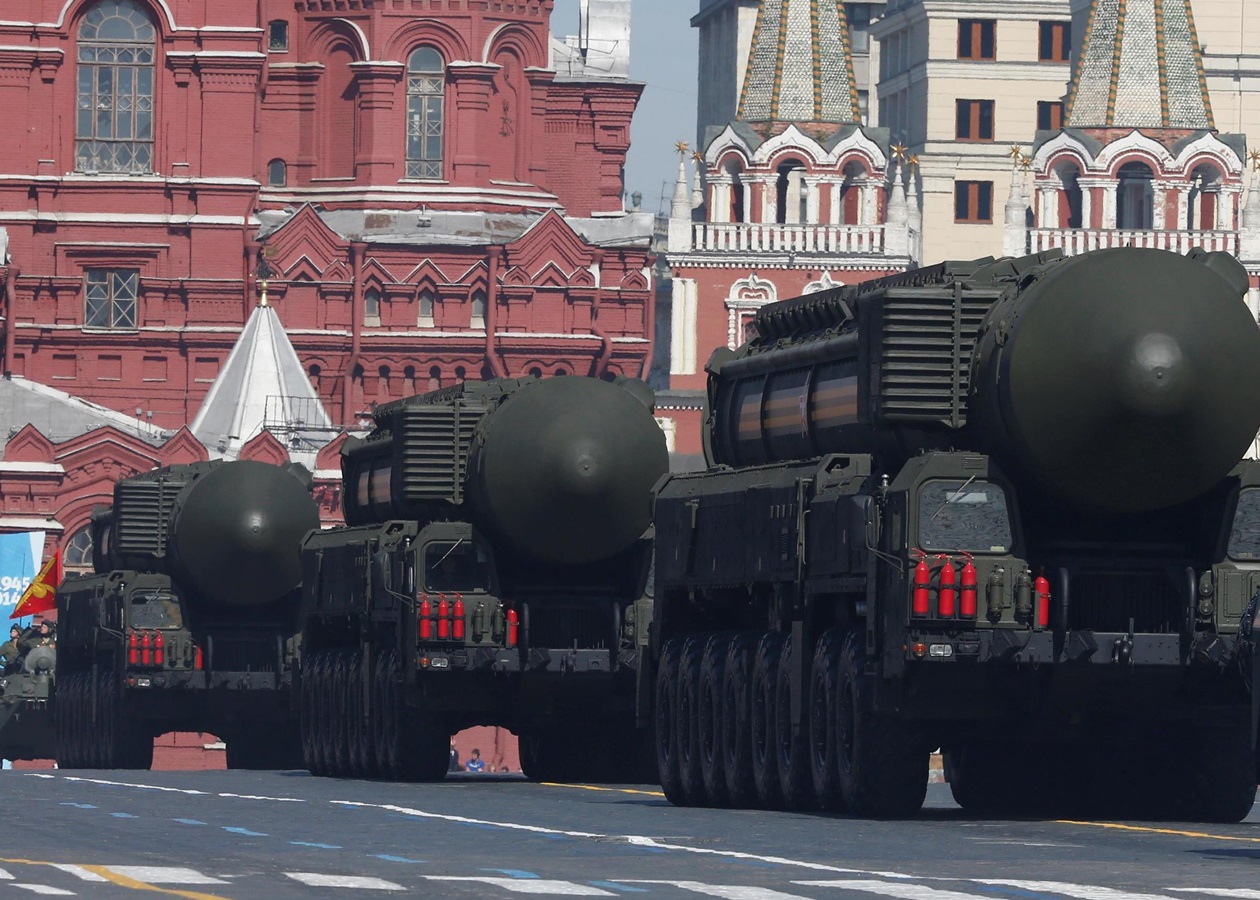
For modern Russia, nuclear blackmail has, to some extent, become a routine political tool. After the end of the Cold War, it seemed that nuclear weapons had become a purely ceremonial attribute of great powers, something like a museum exhibit in the arsenal of international politics. February 2022 shattered that illusion: a few days before the full-scale invasion of Ukraine, Putin held a meeting with Defense Ministry leadership, after which Russian nuclear forces were placed on a special combat alert status. Moscow made it clear: any Western intervention in the “Ukrainian conflict” could provoke a nuclear strike. Since then, this rhetoric has only intensified. Direct nuclear threats against anyone and everyone have become a constant feature of the Russian political landscape and a perennial topic on propaganda channels.
Russian pseudo-intellectuals—people with advanced academic degrees who legitimize the idea of using nuclear weapons—play a distinct and extremely alarming role in this “renaissance” of nuclear rhetoric. Sergey Karaganov, Alexander Dugin, Dmitry Suslov, and others portray strikes with weapons of mass destruction as a “holy battle” and “Russia’s ultimate argument,” and some of them even invoke biblical and eschatological motifs to support this. It is absolutely impossible for a person of sound mind to comment on or even simply listen to this seriously.
The cyclical nature of this rhetoric is also telling. About two or three times a year, a wave of “stirring up” the nuclear issue is launched in the Russian information space. Propagandists begin speaking in unison about how “red lines” have been crossed, how “Moscow’s patience is not limitless,” and how the “nuclear club” is not a metaphor but a very real tool for achieving goals, and so on. Sometimes Putin himself confirms this directly, as happened yesterday at the “Valdai” forum. Then the wave suddenly subsides, as if it had never existed.
The purpose of these irresponsible actions is multifaceted. First, they are directed at the West: to scare Europeans, sow discord within NATO, and demotivate those who fear escalation the most. Second, it is aimed at a domestic audience, creating an image of Russia as a “besieged fortress” with a “last resort” at its disposal. Third, it serves as a tool for exerting pressure in any future negotiations: Moscow understands full well that mere membership in the “nuclear club” gives it a level of leverage that no other weapon can provide. The world is constantly forced to react to this with varying degrees of panic—and thus, the goal is achieved every time.
Could Russia launch a nuclear strike? The metaphor of a gun on the wall
No one knows the answer to this question. The expert community is literally split down the middle. Some say it can—and will strike sooner or later—so we shouldn’t push things that far. Others—and this view is, for some reason, particularly popular in Ukraine—are convinced that it’s all a bluff and that no one will ever press the button.
It’s hard to say who’s actually right. And it’s terrible, in general, that such a topic is even being discussed publicly in expert and analytical circles. But on one point, Putin—strange as it may seem—is definitely right: he aptly quotes the great Russian writer Anton Chekhov and his phrase about “the gun on the wall” (which didn’t sound quite like that in the original, but that doesn’t matter). The point is that if, in the first act of a play, the rifle is already hanging on the wall—and if, on top of that, it’s constantly being polished, pointed at, nodded toward, and gazed at—then in the final act, sooner or later, it will go off, because the temptation is too great. And, of course, it’s better not to let it come to that.
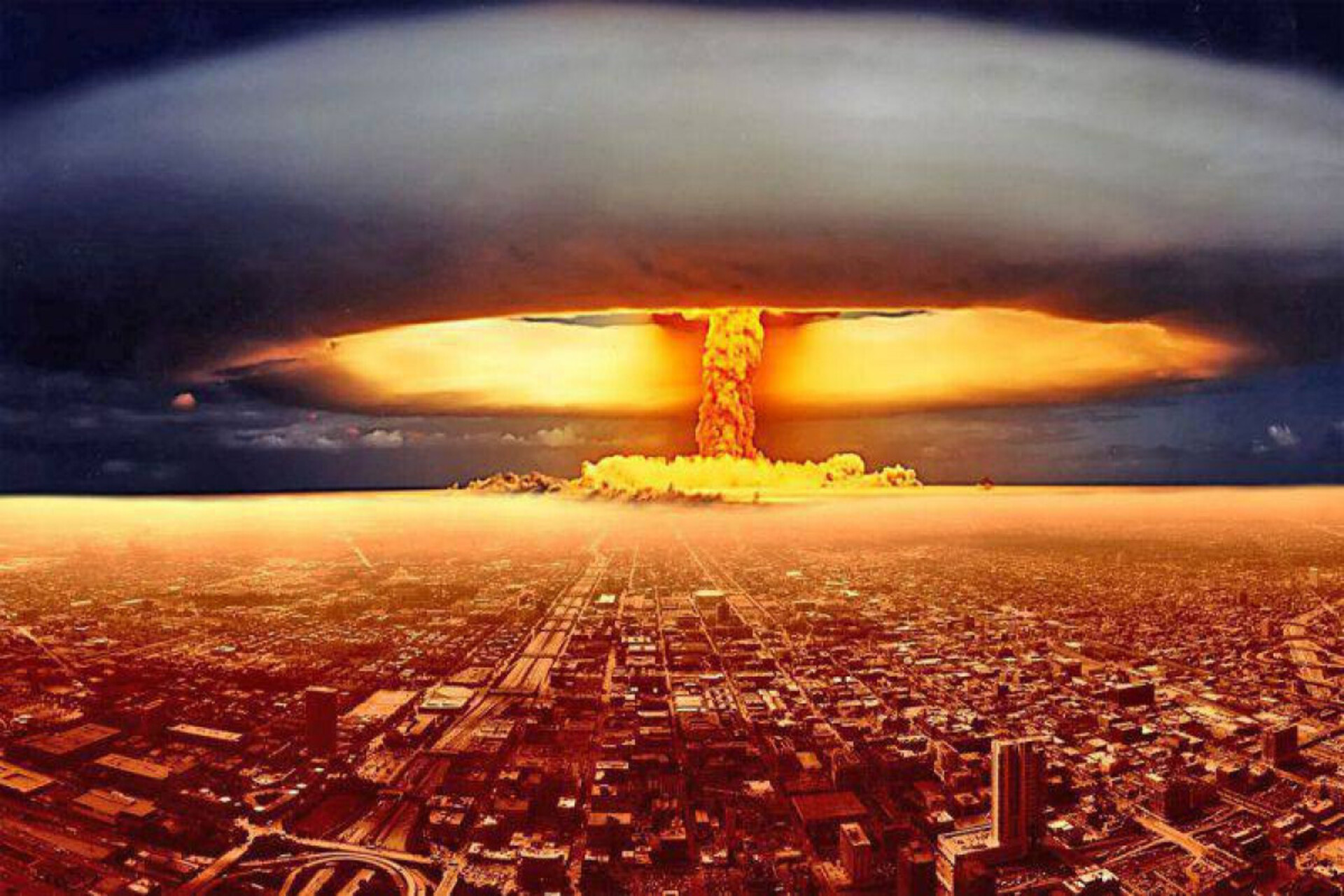
The problem is that the very possibility of a nuclear strike—even if it remains hypothetical—is already changing the behavior of the international community. The U.S. is distancing itself, Europe is afraid, NATO is hesitating, and Ukraine is suffering from shelling and destruction 24/7. Each new wave of nuclear rhetoric makes this situation even more unmanageable. Nuclear blackmail works, and the fear, uncertainty, and anxiety it generates—that is the Kremlin’s true weapon.
The other side of the problem is the normalization of something that should never become the norm. The longer the topic of using weapons of mass destruction remains on the agenda, and the more often serious people with serious expressions talk about it, the less it remains an absolute taboo. There are fewer and fewer safeguards holding the world back from catastrophe. It’s like a ladder into an abyss, where one rung after another is systematically being pulled out.
Expert
Opinions
Political scientist and director of the Ukrainian Institute of Politics Ruslan Bortnik believes that Putin’s statements are undoubtedly a veiled threat. This is especially true given that they come from the leader of the country with the world’s largest nuclear arsenal.
“Of course, Russia is trying to present this rhetoric not as an aggressive move—which is why they claim that nuclear weapons can only be used in the event of an attack on Kaliningrad or other Russian territories. But we both know perfectly well what an ‘attack’ means from the Russian perspective. Russia, for example, accused Ukraine of an ‘attack’ on Donbas. And that was the official justification for the Russian invasion in 2022. So all of this is framed in defensive and protective rhetoric, but it is a veiled threat to use nuclear weapons should Western countries—especially European ones—become further embroiled in the Ukraine-Russia war. That is exactly how it should be interpreted. Russia is trying to intimidate some of the countries on NATO’s European flank, influence public opinion in those nations—societies that do not want war—and test their reaction. “Will they escalate to the highest possible level with Russia, or will they, on the contrary, begin to back down—in which case they can be pushed into making other concessions: for example, concessions regarding Ukraine or other issues,” noted Ruslan Bortnik.
Military expert Oleg Zhdanov is convinced: the more nuclear threats come from Russia, the greater the likelihood that things are going very, very badly for them. Russia only brings up weapons of mass destruction when things aren’t going its way.
“It’s a bluff. They’re trying to intimidate: ‘Look, we have a nuclear club, and we’re waving it around.’ But nuclear weapons are, if you will, like some kind of relic or the Holy Grail. Because as long as they aren’t used, they remain a deterrent. As soon as they’re used—that’s it. Armed conflicts involving weapons of mass destruction will break out everywhere. Everyone will start doing it, and the bomb will cease to be something special. That’s why I don’t think Putin is ready to go up against the whole world. China, for one, is strongly opposed to this and has made that clear on multiple occasions. And in the end, the fallout from the use of nuclear weapons will still blow back toward the Russian Federation. They, too, will not escape a radioactive cloud if these missiles are used. So as soon as they pull out this big stick—I understand that things are going very badly for them,” says Oleg Zhdanov.

In summary, the “Kaliningrad threats” from the Russian Federation and Putin are a classic example of Russia’s strategy of nuclear blackmail: a fabricated pretext, coordinated statements, an official note, and—as the “cherry on top”—personal threats from the Russian leader. The goal here is not only to scare the West but also to remind the world that Russia has a “final argument” and is ready to use it.
In political strategy and international relations, this is known as the classic “madman theory.” The essence of the method is to demonstrate that a particular political actor—for example, a country’s leader—is completely irrational, unpredictable, and “out of his mind,” and that they are ready to go to any lengths—even to the point of unleashing a nuclear war—if provoked. Therefore, it’s better not to provoke them, not to mess with them, and perhaps even to make concessions. After all, no one wants to die collectively in the flames of nuclear explosions because of Ukraine or even some Kaliningrad, right? This is exactly how simply and effectively this strategy works; that is precisely what it is designed to do.
And although the probability of an actual nuclear strike remains low, it is not zero. This means the world cannot afford to ignore this threat. The only way out is immediate de-escalation on all sides, because the Russian gun has been hanging on the wall for a long time. The question is whether the world can ensure that it never fires a shot.


