
Egypt has threatened to defend its rights to the Nile
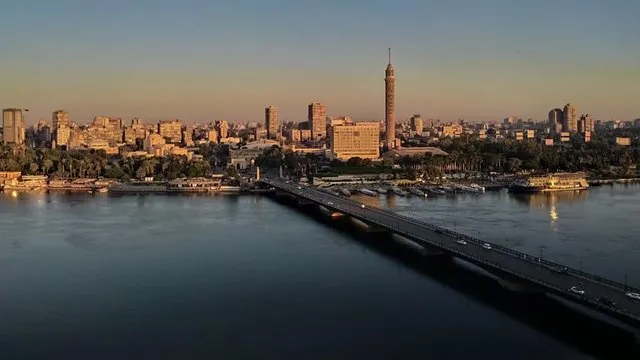
Egyptian President Abdel Fattah al-Sisi stated that his country has a historical and legal right to its share of the Nile’s waters. He also said that Cairo will not leave unanswered any actions that, in his view, could threaten the security of water resources. The statement came amid an ongoing dispute between Egypt and Ethiopia over the use of the Nile and the construction of hydroelectric power plants.
Egyptian President Abdel Fattah al-Sisi stated on Tuesday that his country has a historical and legal right to a share of the Nile’s waters. According to him, this right is enshrined in history and international agreements. “Egypt’s right to a share of the Nile’s waters is enshrined in history and law. It cannot be restricted,” al-Sisi said, as quoted by The National.
The Egyptian president also warned that his country would respond to actions that Cairo considers a threat to the security of the Nile’s waters. “Egypt will not leave unanswered any actions that threaten security in the Nile’s waters,” he said.
Al-Sisi added that Egypt will continue to defend its rights, which, according to Cairo, are guaranteed by international law. However, the president did not specify exactly what actions he was referring to or what Egypt’s response might be.
How Much Water Does Egypt Receive from the Nile?
The dispute over the Nile has been ongoing for many years. This river is of critical importance to Egypt, as the country relies heavily on its water resources. According to The National, under a 1959 agreement between Egypt and Sudan, Cairo is allocated approximately 55.5 billion cubic meters of Nile water per year.
This agreement establishes the procedure for distributing the Nile’s waters between Egypt and Sudan. However, Ethiopia does not recognize this document as defining its rights to water. The country was not a party to the 1959 agreement and believes that the arrangements between Egypt and Sudan cannot set rules for it. It is precisely this issue that has been at the center of one of the region’s major disputes in recent years.
What Is the Problem with Ethiopia?
One of the main causes of the conflict is the Grand Ethiopian Renaissance Dam—a massive hydroelectric power plant on the Blue Nile. The Blue Nile is the main tributary of the Nile. According to The National, it accounts for more than 80% of the water that flows into Egypt.
Ethiopia views the construction of the hydroelectric plant as a vital project for the development of its economy and energy sector. The country aims to use the river to generate electricity, particularly to meet the needs of its population and industry. For Egypt, the situation looks different. Cairo fears that Ethiopia’s control over the large reservoir could affect the amount of water flowing downstream.
The issue becomes particularly acute during the filling and subsequent operation of the reservoir. Egypt insists that the use of the Nile’s waters must be governed by rules that guarantee its needs. Ethiopia, for its part, disagrees with this approach.
Ethiopia Responds to Egypt
Following al-Sisi’s statement, the Ethiopian government also made its position clear. The country’s Ministry of Foreign Affairs stated on Monday that discussions regarding the use of the Nile’s waters must take the region’s geography into account. Addis Ababa emphasized that the Blue Nile originates on Ethiopian territory.
Thus, the Ethiopian government is effectively insisting on its right to use the river’s water resources for its own needs. This differs fundamentally from Egypt’s position, which cites historical agreements and international law.
Why the Nile Is So Important to Egypt
The Nile is of immense importance to Egypt. Most of the country’s territory is desert, so the population and agriculture are concentrated primarily along the river and its delta. Water from the Nile is used for drinking, agriculture, industry, and other needs.
Therefore, any changes in access to water could have serious consequences for Egypt. This is precisely why Cairo has for years been insisting on an agreement with Ethiopia regarding the operating rules for the Grand Ethiopian Renaissance Dam. Ethiopia, on the other hand, believes it has the right to develop its own energy sector and use the natural resources on its territory.
The dispute continues
Despite numerous rounds of negotiations, Egypt, Ethiopia, and Sudan have yet to reach a final agreement on the rules for using the waters of the Nile. The situation remains sensitive for all three countries. Egypt fears a reduction in the amount of water available to it, Ethiopia defends its right to develop its energy sector, and Sudan is also interested in controlling the river’s water resources.
Abdel Fattah al-Sisi’s latest statement indicates that Cairo is not prepared to back down from its demands. At the same time, Ethiopia continues to insist on its right to use the waters of the Blue Nile. Therefore, the dispute over one of Africa’s most important rivers remains far from a final resolution.


