
November Could Be the Toughest Month for Kyiv — The Economist
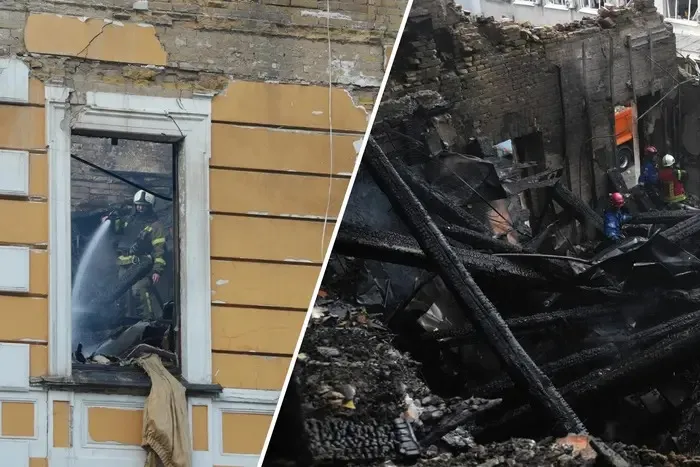
Russia is launching a campaign against Kyiv that combines massive strikes, sabotage, and attempts to destabilize the situation within the country. Ukrainian officials quoted by The Economist expect this campaign to intensify before winter, with its peak likely occurring in November. At the same time, according to the publication, Russia is stockpiling jet-powered drones and ballistic missiles.
Russia is preparing for a new wave of pressure on Kyiv, which could intensify in the coming months. This involves not only strikes on the city but also sabotage and information operations. The publication cites two high-ranking Ukrainian officials who discussed intelligence assessments and Russia’s possible next steps. According to them, the main focus of this campaign is bombing, sabotage, and attempts to sow political chaos.
Ukrainian officials expect pressure on Kyiv to increase even before the start of winter. At the same time, they estimate that the most intense period may occur in November. It is important to note that this is merely a forecast by The Economist’s sources, not a precise prediction of future events.
Russia may expand its list of targets
According to one of the publication’s sources, Russia may attempt to strike not only large critical infrastructure facilities. Among possible targets, he mentioned data centers and supermarkets. The logic behind such strikes, he said, is to affect not only the energy sector or military facilities, but also the daily lives of the capital’s residents directly. Strikes on facilities that people use every day can create an added sense of danger and instability. This is precisely the assessment the source provided to The Economist.
Some of these targets have already been hit. For example, on September 26, a Russian attack damaged a data center in Kyiv, causing internet outages for some users. On September 27, following an attack in the Solomyanskyi district of the capital, a car repair shop, more than 30 vehicles, a restaurant, a gas station, office buildings, and a school were damaged. One man was killed as a result of one of the strikes.
These strikes complement Russia’s traditional tactics of targeting the energy sector and other systems essential to the functioning of a major city. The Economist specifically mentions water supply, sewage, and pumping systems.
Russia Is Stockpiling Drones and Missiles
Ballistic missiles remain one of the main threats to Kyiv. They are more difficult to intercept, and Ukraine’s stockpile of expensive missiles for Patriot systems is dwindling, according to The Economist. At the same time, Russia is increasingly using a new generation of jet-powered drones. According to the publication, these are relatively inexpensive drones that can be controlled by an operator and change course in flight, effectively searching for a target in real time.
It is precisely these drones that have recently become one of the main challenges for Ukraine’s air defense forces. They are significantly faster than conventional strike drones, leaving defenders less time to detect and intercept them. “Glavkom,” citing The Economist, notes that jet-powered drones can reach speeds of about 600 km/h, whereas conventional strike UAVs fly at approximately 250 km/h.
According to a Ukrainian security official, Russia has already stockpiled “thousands” of such drones. He also stated that Moscow is building up its stockpile of ballistic missiles and could deploy these weapons within the next two months. At the same time, he estimates that Ukraine will need several more months to reach the necessary production levels of effective interceptors.
Russia is indeed increasing its use of jet-powered drones. Air Force spokesperson Yuriy Ignat stated on September 29 that Russian troops had already deployed 3,177 jet-powered UAVs in September, compared to 2,850 in all of August. President Volodymyr Zelenskyy also reported that in September, the Ukrainian military intercepted or neutralized more than half of the jet-powered “Shaheds.” At the same time, he emphasized the need to increase the production of interceptors.
Sabotage Operations May Intensify
Another aspect of the Russian campaign involves operations within Ukraine. Ukrainian officials expect that Russia may make more active use of sabotage and other hybrid operations. The Economist, citing Ukrainian counterintelligence, reports that approximately seven to eight Russian operations are thwarted in Ukraine every week. These include, in particular, attempts to organize assassinations and other attacks.
According to the publication’s sources, most of these operations are organized remotely. Potential operatives are recruited directly in Ukraine via messaging apps, particularly Telegram. In some cases, according to Ukrainian intelligence agencies, operatives may be dispatched from Russia. A source speaking to The Economist also suggested that dormant Russian intelligence cells may remain on Ukrainian territory. This is specifically the source’s assessment, not a confirmed fact regarding the existence of specific networks.
Moscow Wants to Exert Influence Through More Than Just Attacks
A third area mentioned by Ukrainian officials is information pressure. This involves attempts to spread disinformation, stir up protest sentiment, and create the impression of political instability. According to The Economist, Moscow may attempt to use bot networks and related information campaigns for this purpose.
Andriy Kovalenko, former head of the Center for Countering Disinformation, who is quoted by the publication, is skeptical about Russia’s ability to achieve such an effect. According to him, Moscow has been devising such plans for several years now, hoping to use information pressure to provoke protests and even demands to end resistance. Kovalenko stepped down as head of the Center for Countering Disinformation in late September. President Volodymyr Zelenskyy signed the corresponding decree on September 28.
Kyiv Prepares for Winter
Despite all the risks, the capital has become better prepared for massive attacks over the years of the war. The Economist notes that Kyiv’s internet infrastructure has become more decentralized, and repair crews have gained significant experience in quickly restoring damaged facilities. This means that a single strike on the infrastructure does not necessarily lead to a prolonged paralysis of the entire city. Systems and networks are being duplicated, and emergency services already have experience responding to large-scale attacks.
At the same time, risks for the winter remain high. The capital is already preparing for a possible deterioration in the situation with energy and other city services. The Economist also reports that some Kyiv residents are considering temporarily leaving the city for the winter. According to the publication, some officials have privately suggested that parts of the capital could become noticeably emptier during the cold season. This is also an assessment and expectation based on sources, rather than an official forecast regarding Kyiv’s future population.
Reactive drones have already become a separate problem. Due to their high speed and ability to change course, air raid alerts in Kyiv may last longer, and the city may effectively be caught in a cycle of “alert—all-clear—new alert.” This disrupts the operations of public transportation, businesses, and other institutions. Thus, The Economist describes a possible new phase of pressure on Kyiv, in which Russia is attempting to simultaneously strike at infrastructure, wear down air defenses, carry out sabotage, and influence the information landscape.
It is not the journalists at *The Economist* themselves who identify November as a possible peak, but rather the Ukrainian officials with whom the publication spoke. Their assessments are based on intelligence data and observations of Russian activity. It is impossible to predict in advance to what extent this scenario will actually unfold. The Economist writes about this in an article on the new campaign of Russian strikes against the capital.
Since August 27, 235 air raid alerts have been recorded in Kyiv, lasting a total of 261 hours—more than 10 days. Ihor Klymenko, Secretary of the National Security and Defense Council, stated that the intensity of these Russian attacks has become a new challenge for Ukraine’s air defense forces. According to him, new Ukrainian interceptor systems are already undergoing testing, and some combat units are using them in the field. Ukraine is preparing to move to mass production of these systems.


